
Table of Contents
The 48-Team Impact on Goal Averages
The 2026 FIFA World Cup introduces a monumental structural shift. Moving from 32 to 48 teams dilutes the average quality of the tournament's lower tier. For bettors, this immediately raises a critical question: Will this result in more goals per game? Our AI models suggest a nuanced reality.
Historically, the 32-team format averaged between 2.2 and 2.7 goals per match. However, the introduction of 16 additional teams brings nations with weaker defensive structures into the fold. When these Tier 3 or Tier 4 nations face elite Tier 1 teams (like France, Brazil, or England), the expected goals (xG) variance skyrockets.
The "Blowout" Variable in the Group Stage
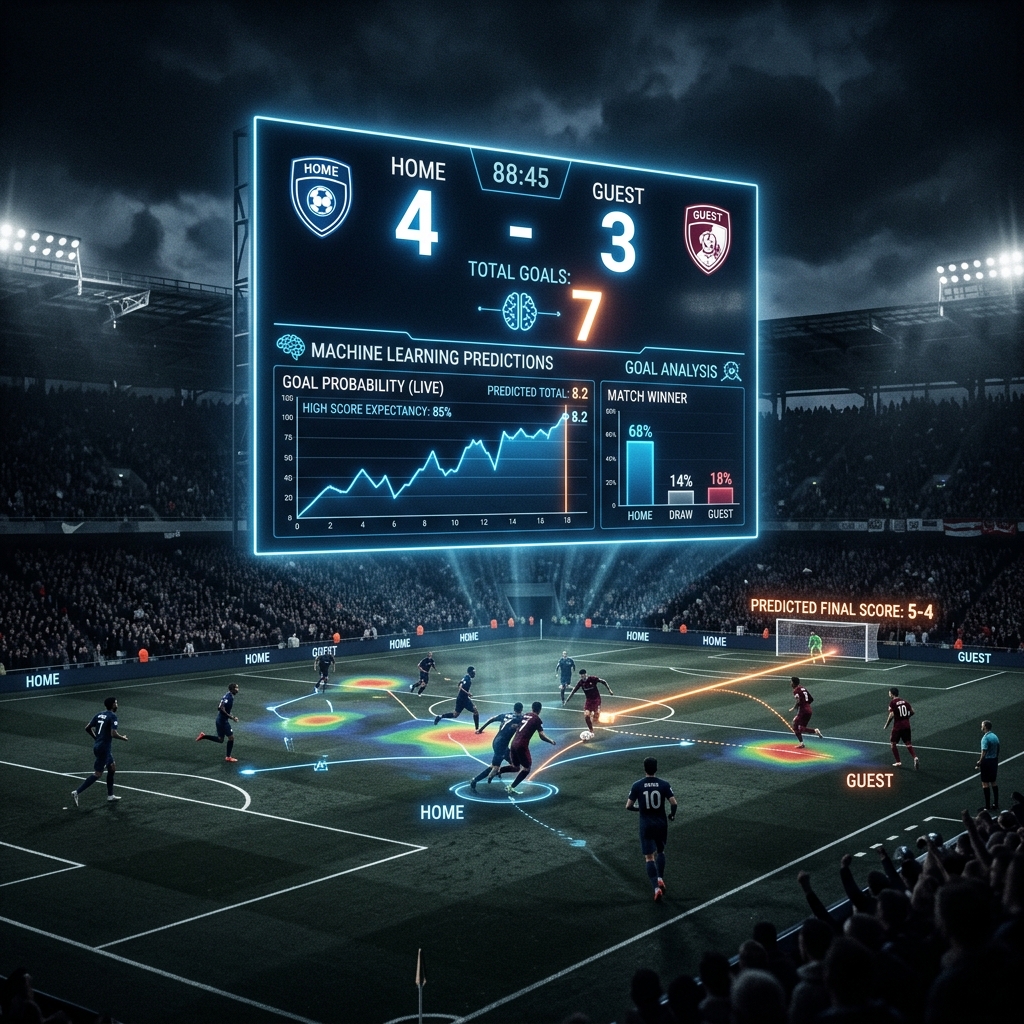
Machine learning algorithms are projecting an increase in "blowout" matches (games with a goal margin of 3 or more). During the group stage, top-seed teams are heavily incentivized to secure goal difference early.
Identifying Asymmetrical Matchups
AI identifies these mismatches not by FIFA rankings, but by analyzing transitional defensive metrics. If a newly qualified team struggles with defensive transitions against high-pressing opponents, the AI flags a high probability for Over 3.5 or Over 4.5 goals.
Machine Learning and Expected Goals (xG)
Expected Goals (xG) is the foundation of modern football betting. AI models ingest thousands of historical data points to assign a goal probability to every shot taken.
How AI Projects xG for International Teams
Unlike club football, international teams play far fewer matches together. This means basic xG data can be noisy. Advanced AI models apply regression analysis to isolate a player's core attributes and translate them to the international stage.
The Midfield Creativity Index
Our models track a "Midfield Creativity Index." This measures how frequently a team's midfield can deliver progressive passes into the penalty area. Teams with a high index consistently overperform the baseline Over 2.5 goals market.
Adjusting for Defensive Blocks
When a highly creative team faces a "low block" defense, raw xG can be misleading. The AI adjusts the expected total goals down, recognizing that breaking down 10 men behind the ball reduces shot quality.
The Impact of Set Pieces
In low-block scenarios, set pieces account for up to 35% of total xG. Teams with towering center-backs and elite dead-ball specialists receive a bump in their total goals projection from the algorithm.
Weather, Geography, and Travel Factors
The 2026 World Cup spans across the United States, Mexico, and Canada. The sheer geographical size introduces massive variance in travel fatigue, altitude, and climate.
Altitude in Mexico City and Guadalajara
Matches played at high altitude have historically shown a slight increase in late-game goals due to defensive fatigue. AI models map out the exact travel schedule of every team. If a team travels from sea-level Vancouver to altitude in Mexico City on short rest, the algorithm significantly increases the projected xG for the opposing team in the final 30 minutes.
Humidity and Heat Protocols
Summer matches in cities like Houston or Miami will feature extreme heat and humidity. Historically, extreme heat slows the pace of the game, pushing the value toward the "Under" in total goals. The AI automatically factors in localized weather forecasts to adjust the total goals baseline up to 72 hours before kickoff.
Knockout Stage Dynamics
Once the tournament reaches the knockout phases (now starting with a Round of 32), the mathematical landscape shifts dramatically.
The Fear of Elimination
Knockout football is inherently risk-averse. Teams prioritize defensive shape over attacking expansion. The AI models identify a sharp drop-off in first-half xG during knockout rounds.
Extra Time and Penalties
With a 32-team knockout bracket, the likelihood of matches going to extra time increases. When betting total goals (which usually applies to the 90-minute market), the AI heavily favors the "Under 2.5" and even "Under 1.5" lines in evenly matched knockout ties, particularly from the Round of 16 onwards.
Correlation with Top Goalscorer Data
Total tournament goals and the Golden Boot race are deeply intertwined. If the AI predicts an unusually high-scoring tournament (e.g., an average of 2.8 goals per game), the baseline requirement to win the Golden Boot rises from the traditional 6 goals to 7 or 8.
Finding Value in the Over/Under
By aggregating the projected goals of the top 10 Golden Boot contenders, AI models can cross-reference the overall tournament goals market. If bookmakers set the total tournament goals line at 165.5, but the AI aggregates the team-by-team projections to 172, a massive +EV opportunity exists on the "Over."
The Best Way to Practice is Free Tiers
Don't guess the Over/Under. Use the data. Test out real AI projections for total goals and see the math for yourself.
Available on top 3 edge tools →